
We had the pleasure of listing an old, charming Victorian home in Vista a few years back. The buyers were head over heels for the original hardwood floors, but when we got to the primary bathroom, the husband stopped and stared at the wall. “Why is there a mail slot in the medicine cabinet?” he asked. There was a tiny, thin slit in the back of the metal medicine cabinet. It wasn’t a mail slot. It was one of the many bathroom features that had completely vanished over time. It’s item #1 in our listicle below.
In our world, these aren’t just “old house quirks.” They are time capsules. They tell a story about how people used to live, what we valued, and sometimes, how we dealt with clutter before the modern era.
Let’s take a fun trip down memory lane and look at a few things you will only find in the bathroom of homes way back in the day.
The Razor Blade Slot
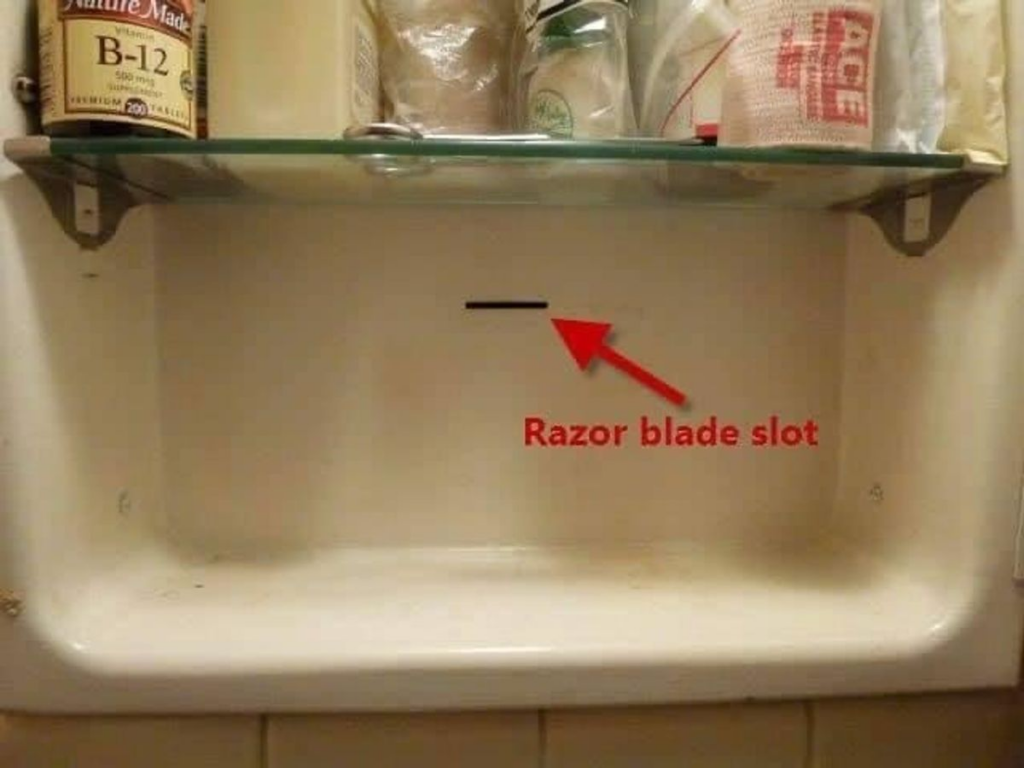
That “mail slot” our client found is actually one of the most common mysteries in pre-1970s American bathrooms. Back when men used double-edged safety razors, there was no easy way to throw away the dull blades. They were too sharp for the kitchen trash and could easily slice through a garbage bag.
The solution? A tiny slit in the back of the wall-mounted medicine cabinet. You would simply drop your used blade into the slot, where it would fall into the empty space between the wall studs. Architects figured that it would take centuries to fill up that wall cavity with tiny slivers of metal. If you ever find yourself doing a renovation on an old North County cottage and a pile of rusty razors spills out from behind the drywall, now you know why.
The Sitz Bath

Occasionally, in a very grand historic home, maybe near the “Heritage Hill” area of Escondido, you might find what looks like a bathtub that was shrunk in a hot dryer. This is a “Sitz Bath” (from the German word sitzen, meaning to sit).
Unlike a full-sized tub, a sitz bath was designed for you to sit upright with water only covering your hips. It was marketed as a “therapeutic” fixture for various health ailments and was considered the height of sophistication in the early 20th century. Most modern homeowners see them and think oversized bidet or dog wash station, but they were originally personal spas for the elite.
Built-in Wall Hampers
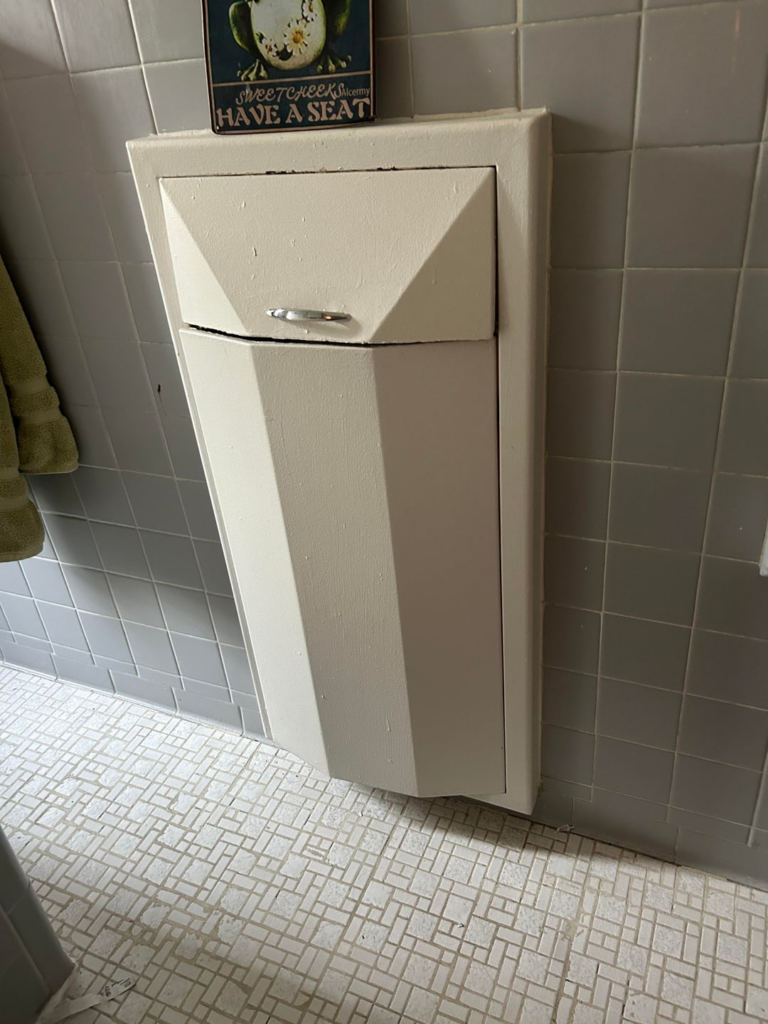
In the olden days, they were gaga for anything built-in (you’ll see in the next few examples). Before we had plastic laundry baskets, many mid-century homes featured a metal or wooden “tilting” hamper built directly into the wall. You would pull a handle, the door would tilt out, and you would toss your towels inside.
These were fantastic for keeping the floor clear, especially in the smaller footprints of older homes. While they have mostly been replaced by freestanding bins or dedicated laundry rooms, we still find them in original condition in some of the well-preserved ranch homes in Vista and San Marcos. They are a great reminder that minimalism isn’t a new concept.
The Built-in Scale
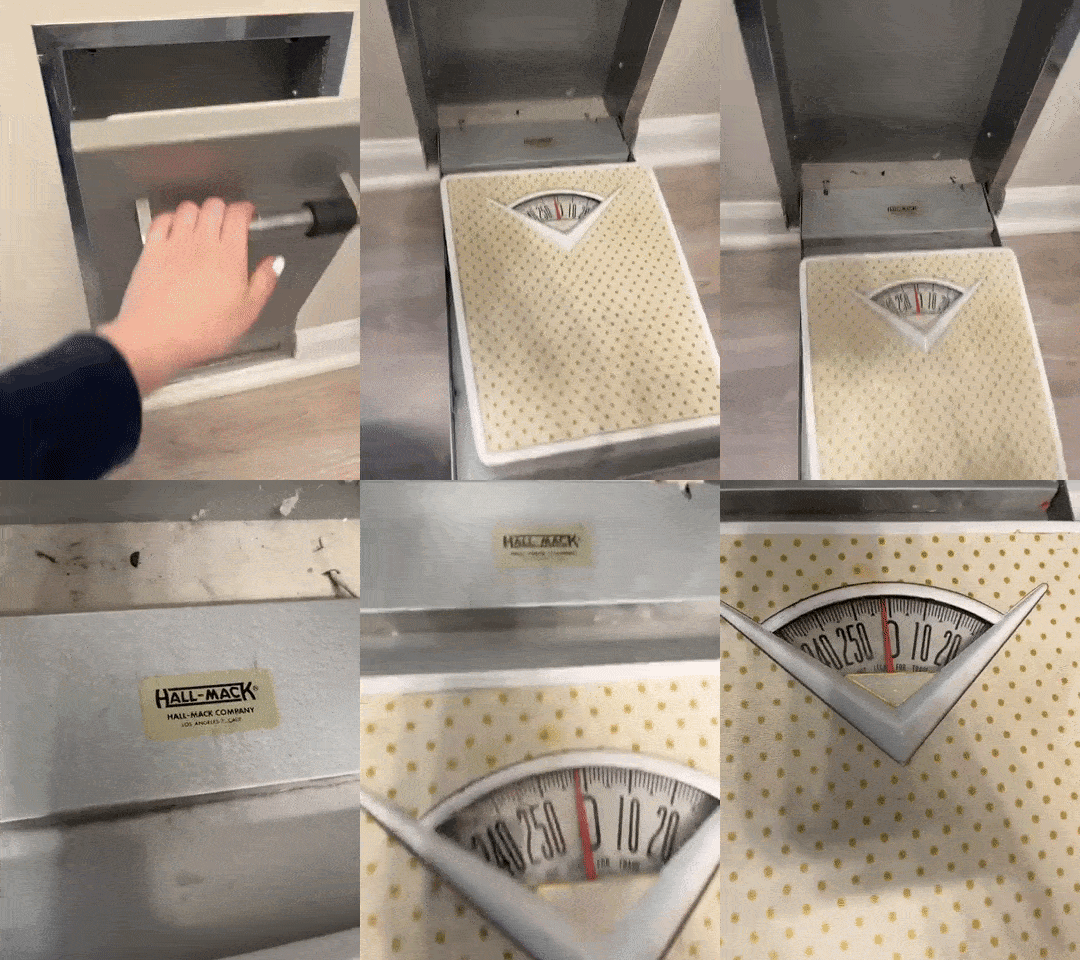
In the late 1950s and early 60s, weight management became a huge trend in American culture. To cater to this, some high-end builders started installing scales directly into the bathroom floor.
While it saved floor space and looked incredibly sleek, they were notoriously difficult to repair. Once the spring wore out, you were left with a permanent piece of non-functional floor art. Today, we’ve traded these for smart scales that sync to our phones, but the built-in version remains a legendary piece of mid-century tech.
Concealed Toothbrush and Soap Holder
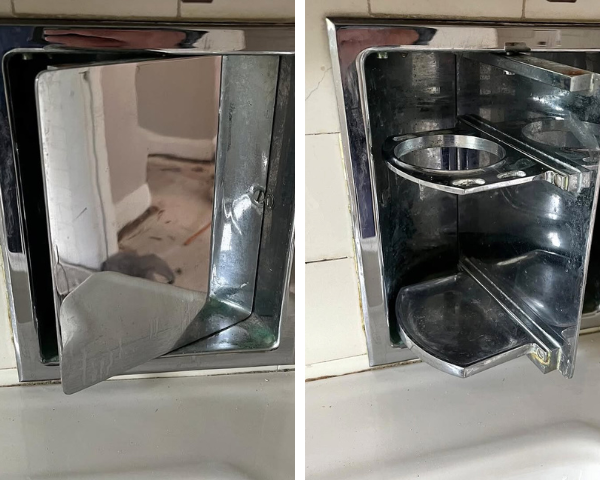
Back in the 1940s and 50s, people wanted their bathrooms to look as sleek as a new Cadillac. The Hall-Mack company was the king of this trend. Instead of crowding the sink with cups and toothbrushes, they used a design that tucks everything neatly into the wall.
With a simple push, the unit would flip over to hide your toiletries and show only a clean chrome surface. It was the original hidden storage hack. While most of these have been replaced by modern medicine cabinets, finding an original, working Hall-Mack unit in any home is like finding a piece of buried treasure.
High-Tank Pull-Chain Toilets
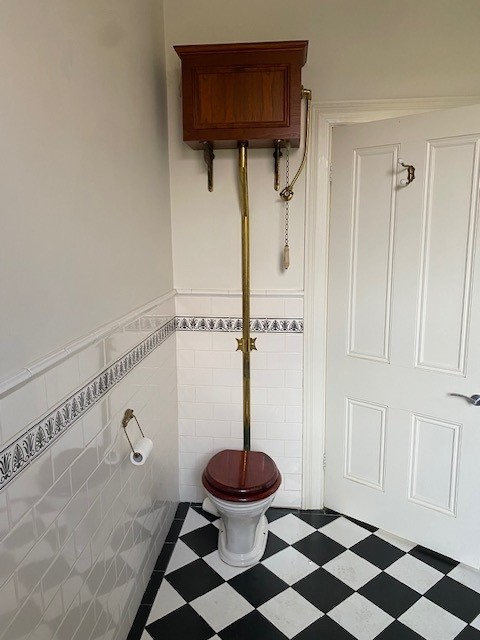
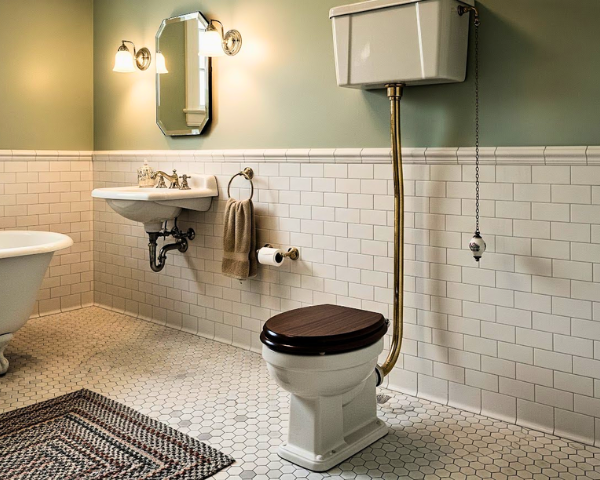
Long before we had the sleek, low-profile toilets of today, we had the high-tank system. If you walk into a very old historic home, you might see a wooden or metal tank mounted near the ceiling with a long pipe leading down to the bowl.
To flush, you had to pull a long chain with a porcelain handle. These systems used gravity to create a very powerful flush. While they were eventually replaced by more compact designs, many homeowners are actually bringing these back as part of vintage-inspired renovations because they add so much character and a touch of Victorian elegance to the home.
The Chrome “Towel Bar” Legs
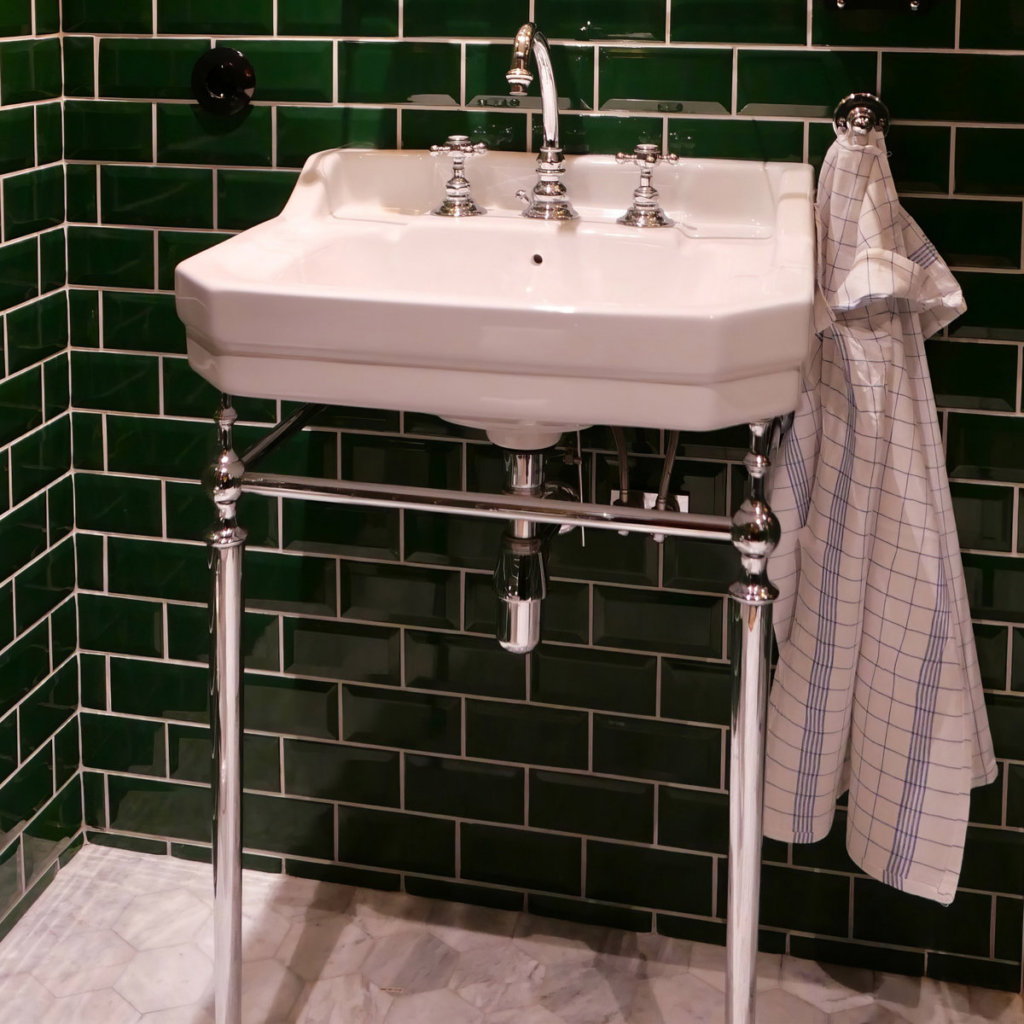
Before vanity cabinets went all the way to the floor, many sinks were wall-hung or supported by two thin, elegant chrome legs at the front. But these weren’t just for support; they were actually designed to be extra towel bars!
In the small bathrooms of the 1940s, space was at a premium. Having your towel hanging directly off the front of the sink meant you didn’t have to reach across the room while your face was full of soap. It was a brilliant bit of functional design that gave bathrooms a very industrial-chic look long before that was a trendy term.
The Toilet Roll Dolly

This is one that many of us remember from our grandparents’ houses. Before we had modern, minimal bathrooms, it was considered a bit “unpolished” to leave an extra roll of toilet paper out in the open.
The solution was the crochet toilet paper doll. These featured a doll’s torso perched on top of a roll of paper, with an enormous, hand-crocheted skirt that hid the roll entirely. Some were fancy and elegant, while others were a bit more colorful and quirky. It was a way to add a bit of personality to the room while keeping the essentials hidden from view. While you won’t find these as a standard feature in a modern listing, they are a classic piece of Americana that always sparks a conversation.
Old homes are full of stories. Exploring these old features makes us realize that our homes are more than just buildings, they’re reflections of how we’ve grown. We might laugh at the American Toilet Doll today, but fifty years from now, our grandkids will probably be asking, “Wait, you actually had to use your hands to turn on the faucet?”
Explore our blog for more interesting home and real estate articles.